Risk and reward
How often you need to be right.
How often do you need to be right? Risk to reward is the distance to your stop against the distance to your target. It decides how many losses you can afford.
Stop 2%, target 6%: 1 to 3. You risk one unit to make three. Lose three times, win once, and you are even before fees.
At 1 to 3 you break even winning 25%. At 1 to 1 you need better than 50%. Fees and funding push every number a little higher.
1 to 1 at 50% is a slow loser. A coin flip with 0.09% taken off each round trip. The exchange wins that game. You do not.
Put the stop where the idea breaks. Then ask if the target is three times further. If it is not, the trade is not good enough. Skip it.
Do the math.
Break-even check.
Is the trade worth it? SOL long idea at $186, $500 paper position. Stop at $182, target at $190. Buy means take it, skip means pass, sell means short it instead.
Risk and reward · 3 min
How often do you need to be right?
Risk to reward is the distance to your stop against the distance to your target. It decides how many losses you can afford.
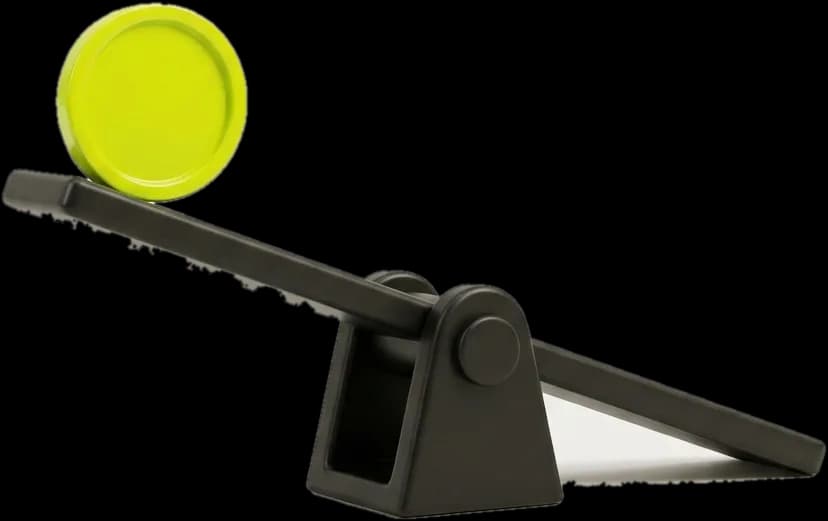
Coach Bobby says:Risk one to make two, and you can be wrong half the time and still be fine.

Go deeper
Break-even win rate is risk divided by (risk plus reward): at 1 to 3 it is 25%, at 1 to 1 it is 50%, before fees. Taker fees of 0.09% a round trip and funding push every number up, which is why a 1 to 1 setup with a coin-flip win rate loses slowly over time. Placing the stop where the idea is wrong and only taking trades where the target is at least three times further filters out most of the trades that bleed an account.